Project Based STEM Curriculum
Crafting Real-World Innovators
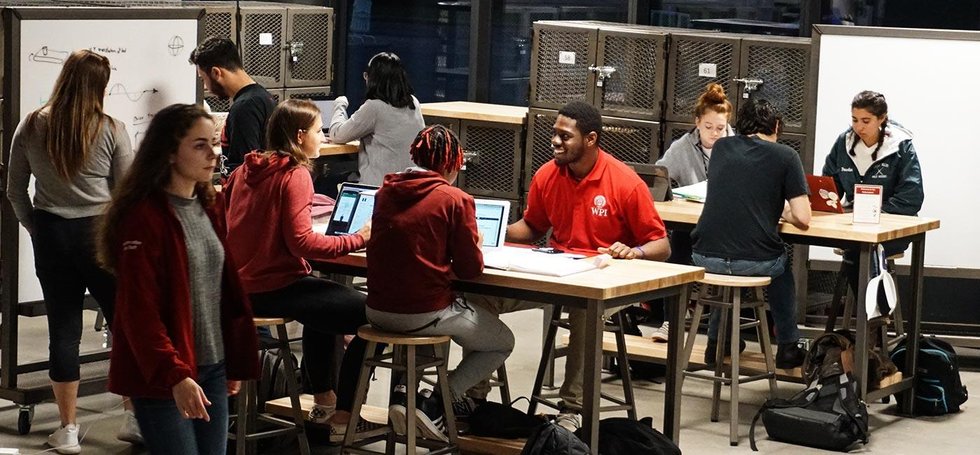
Worcester Polytechnic Institute (WPI) in Worcester, Massachusetts has been a pioneer in implementing Project-Based Learning (PBL) as an innovative educational approach that fosters active learning, critical thinking, and collaboration among students. More than ever, higher education needs to prepare students not just for their first jobs, but for lives and careers that, much like open-ended projects, are difficult to predict.
At WPI, Project Based Learning takes shape in various ways. In almost every class, there is a project component; whether it be a term-long project, or a final project to encapsulate what was learned in the class, every professor will be including PBL in the syllabus. Aside from daily project work, WPI also has larger-scale projects that students complete during their time at the university.
In their first year, students have the option to complete the Great Problems Seminar (GPS). GPS is completed during students' first year, and it explores problems that face today's society. Some examples of GPS courses have topics like 'Shelter the World', ‘Recover, Reuse, Recycle', 'Power the World', and 'Livable Cities'. GPS works to introduce PBL to incoming first year students and enhance skills like oral communication, managing time, groupwork, and critical thinking.
The Interactive Qualifying Project (IQP) is one of the most distinctive elements of WPI's project-based curriculum, giving every WPI student the experience of working in interdisciplinary teams to solve a problem or need that lies at the intersection of science and society. Unlike an academic course, this project involves students working in teams with students not in their major to tackle an issue that relates science, engineering, and technology to society. Sustainability serves as a common theme for IQPs, many of which address problems related to energy, environment, sustainable development, education, cultural preservation, and technology policy. 90% of WPI students choose to complete this project off campus at one of WPI's 50+ project centers around the globe. Every admitted WPI student gets up to $5,000 to help cover the cost of travel which means that WPI is able to send more scientists and engineers abroad than universities twice its size. Of this project, WPI Faculty Project Advisor Grant Burrier, PhD says “What I see as a project advisor time and time again are students producing these results that I would expect of graduate students. Completing projects, completing technically difficult tasks with grace, with ease, and with a comradery and teamwork that is absolutely unique.” Students in this project come up with sustainable fishing solutions in Costa Rica, reduce single-use plastic silverware in Hong Kong, create ways to alert deaf communities about approaching wildfires in Australia, and build and design vertical gardening solutions in South Africa. The approach problems in the community with a sustainable, lasting focus.
The final project for WPI students is the Major Qualifying Project, or MQP. Generally undertaken in teams and completed in a student's senior year, this capstone project is an integral element of WPI's project-based education. MQPs are high-level research projects that address problems typical of those found in the student's professional discipline, and as such are coordinated through the student's academic department. MQPs can be conducted off campus, on campus, and can be sponsored by companies. MQPs cover a wide range of topics, from publishing video games to creating less invasive medical testing devices. Some students even apply for (and receive) patents after their MQP!
Jetro, a WPI alumnus from Thailand who studied Robotics Engineering and Electrical and Computer Engineering, and got his master's degree in Robotics Engineering, says "Six years and two patents later, I am a firm believer in WPI's unique project-focused curriculum. This education has trained me to think critically about multifaceted real-world problems, work effectively in interdisciplinary teams to develop holistically solutions, and has equipped me with the technical prowess to effectually manifest these ideas into tangible products. I am proud to be a WPI alumnus and will forever call WPI my home."
Worcester Polytechnic Institute's commitment to Project-Based Learning sets it apart as an institution that prepares students for real-world challenges. Through its project-centered curriculum, collaborative learning approach, and global experiences, WPI equips students with the skills and mindset needed to thrive in the 21st-century workforce.