PPE: The Hot Major Everyone Is Talking About
Why Philosophy, Politics and Economics Has Become Today's Breakout Degree
Few undergraduate programs have seen their popularity rise as quickly, or as globally as Philosophy, Politics and Economics. What started at Oxford in the 1920s has steadily grown into one of the most recognisable interdisciplinary degrees in the world. Today, more than 150 universities offer PPE or a close variant, and interest keeps rising.
From Oxford's Imperial Roots to a Modern Trend
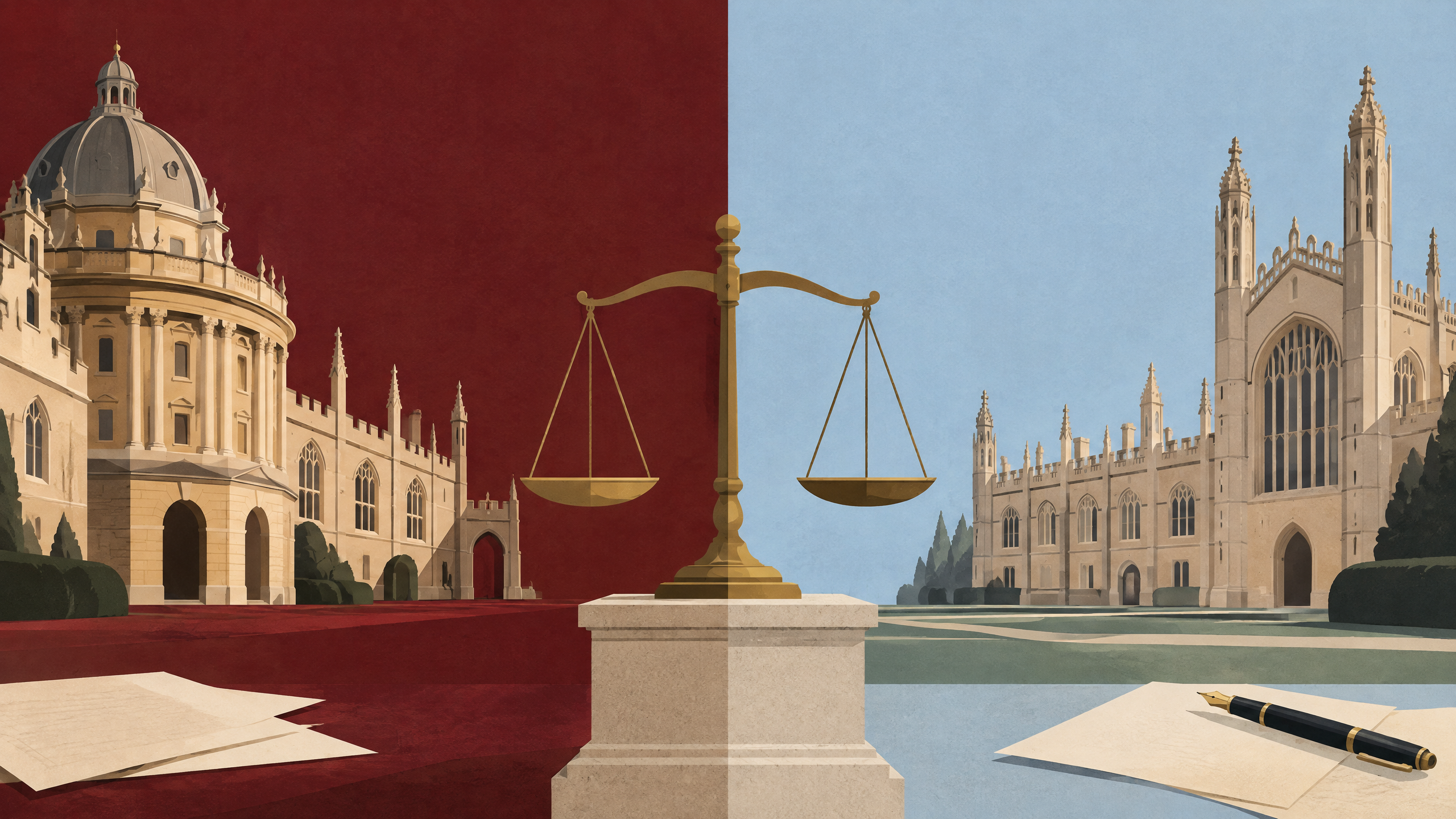
PPE wasn't created as a fashionable major. Oxford originally designed it to educate future administrators who were more attuned to the modern world than to a narrow focus on classics. That history still shapes how some people see it. But the political footprint of PPE graduates is real. As The Oxford Student reported, Oxford's PPE alumni include:
- 4 Pakistani PMs and 1 President
- 3 PMs of Australia
- Political leaders in Myanmar, Ghana, Peru and Thailand
And in the UK, the influence is unmistakable. In the 2014 General Election, voters were essentially choosing between a PPE graduate from Brasenose and a PPE graduate from Corpus Christi.
Still, PPE is no longer just an Oxford pipeline for future PMs. Oxford now has more than 600 students enrolled in PPE, and nearly 40 UK universities offer versions of it. The degree is now taught in about 20 Commonwealth universities, is well established in African, Indian and Asian universities, and has grown rapidly in the U.S., where over 75 universities, from Adelphi to Yale, offer similar programs.
A Cure for Early Specialisation?
One reason PPE is booming is that it pushes back against early academic narrowing. As David Willetts pointed out, PPE thrives because a problem of English education is too much specialisation too soon. PPE offers structure, but also flexibility, something students increasingly want. Many universities have expanded PPE into PPEL or PPL, weaving law into the mix without the full commitment of a law degree. These variations appeal to students interested in public life, policy or governance who want time before specialising.
That said, not all PPE programs function the same way. Students need to look beyond the name and understand how strongly the three fields are integrated, what kinds of assignments or research are required, and how the curriculum is structured year by year.
Prestige Meets Purpose
A major reason PPE resonates with today's teenagers is that it fits a very specific tension. Students worry that a traditional liberal arts degree might feel disconnected from real careers, yet they're not ready to choose a specialised path at 18. PPE sits in the middle. It offers academic depth but also clear relevance.
Yale's version, Ethics, Politics and Economics, describes the degree as offering analytic rigor, enduring normative questions, and an integrative and critical understanding of institutions and policies. In simpler terms, students learn how societies function, where systems fail and how decisions are shaped, skills that translate into many fields, from government to finance to consulting.
It's no surprise, then, that interdisciplinary degrees in the social sciences are booming. They match the way young people want to study: rigorous, connected to current issues and open-ended enough to support different career paths.
Admissions: Different Schools, Different Expectations
Because PPE varies widely, so do the entry requirements.
At Manchester, admissions are flexible. Students can offer quite a number of different A-level subjects, and IB students may present Standard Level Mathematics.
At the other end of the spectrum is the London School of Economics and Political Science, whose PPE is a four-year program giving equal weight to all three subjects. Here, philosophy includes formal logic, and economics is highly quantitative. As a result, LSE requires an A* in Maths for A-level applicants and 7 in Higher Level Mathematics for IB students.
In the U.S., because most universities do not admit by major, PPE applicants follow standard admission expectations, except for highly selective programs that cap majors or require internal applications. Yale once admitted students to its highly selective EPE major only after enrollment but now offers direct admission, showing how demand has outgrown prior structures.
What Students Should Actually Check Before Choosing PPE
The big advantage of PPE, flexibility, can also make it hard to evaluate. Students should:
- Study the year-by-year course plan rather than relying on the major's name
- Examine whether the three fields are meaningfully integrated
- Consult syllabi to understand what “philosophy” or “economics” actually means in that programme
- Review research expectations, capstones and interdisciplinary work
For instance, at the LSE, students present independent research at a conference, and the strongest work appears in Studies in Philosophy, Politics and Economics. Publications like these offer a direct window into the programme's academic culture.
Why PPE Is the Major of This Moment
PPE has momentum because it fits the needs of a rapidly changing world. It trains students to think across systems, not inside silos. It gives them grounding in ethics, power, markets and decision-making, all essential for leadership across sectors. It prepares students not just to understand the world, but to participate in it with perspective and intellectual range.